Your Guide to Car Rental Spain Fuel Policy Explained
car rental Spain fuel policy explained

Your Guide to Car Rental Spain Fuel Policy Explained

Navigate Spanish car rental fuel policies with ease and confidence, ensuring a smooth and cost-effective journey.

Understand & Save Now

Key Takeaways

  • ✓ Full-to-Full is generally the most cost-effective fuel policy.
  • ✓ Pre-purchase fuel policies often include service charges.
  • ✓ Always check the fuel policy before booking your rental car.
  • ✓ Document the fuel level and condition of the tank at pickup and drop-off.

How It Works

1
Choose Your Policy

When booking, select the fuel policy that best suits your travel plans and budget. Full-to-Full is usually the default and recommended option.

2
Inspect at Pickup

Before driving away, verify the fuel gauge matches what's stated on your rental agreement. Take photos or videos for proof.

3
Refuel Strategically

If you chose 'Full-to-Full', plan to refuel close to the drop-off location. Keep your receipt as proof of purchase.

4
Return & Document

At drop-off, ensure the fuel level matches your policy. Document the gauge again, especially if there's any dispute.

Decoding the Main Car Rental Spain Fuel Policies
A car refuels at the illuminated St1 gas station in Jönköping, Sweden at night. Photo: Efrem Efre / Pexels
Navigating the various fuel policies offered by car rental companies in Spain can often feel like deciphering a complex code. Yet, understanding these options is paramount to avoiding unexpected charges and ensuring a smooth, budget-friendly trip. The most common fuel policies you'll encounter are 'Full-to-Full', 'Full-to-Empty' (often called 'Pre-purchase' or 'Fuel Purchase Option'), and less frequently, 'Full-to-Quarter' or 'Same-to-Same'. Each has its own set of advantages and disadvantages, primarily impacting convenience and cost. Your choice should ideally align with your travel itinerary, the duration of your rental, and your willingness to refuel the vehicle yourself. The 'Full-to-Full' policy is widely regarded as the most transparent and, in most cases, the most economical option. With this policy, you pick up the car with a full tank of fuel and are expected to return it with a full tank. The primary benefit here is that you only pay for the fuel you actually consume, at local pump prices, which are typically lower than the rates charged by rental companies. The potential downside is the responsibility of finding a petrol station near your drop-off location, which can sometimes be a rush, especially if you're unfamiliar with the area or have a tight schedule. However, with the widespread availability of GPS and mapping apps, locating a nearby station has become significantly easier. This policy puts you in control of your fuel costs, allowing you to choose where and when to fill up, often leading to considerable savings over the course of your rental. It also eliminates any dispute over unused fuel. Conversely, the 'Full-to-Empty' or 'Pre-purchase' policy means you pay for a full tank of fuel at the time of pickup. You can then return the car with as little fuel as you like, without needing to refuel it before drop-off. While this offers unparalleled convenience, especially for those with early morning flights or tight schedules, it almost always comes at a higher price. Rental companies typically charge a premium for the fuel itself, often exceeding local pump prices, and may also add a service charge for the convenience. The biggest drawback is that you are unlikely to use every last drop of fuel you've paid for, essentially paying for fuel you don't consume. This can lead to significant overspending, particularly for shorter rental periods or if your travel plans involve less driving than anticipated. It's crucial to calculate whether the convenience outweighs the potential extra cost, especially when considering a car rental in Spain where fuel prices can fluctuate. Understanding these fundamental differences is the first step in making an informed decision that suits your travel needs and budget.

Understanding 'Full-to-Full': The Gold Standard for Savvy Renters
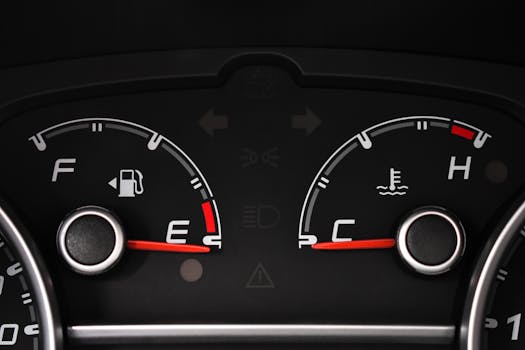
Detailed view of a car's fuel and temperature gauges on dashboard. Photo: Abdulvahap Demir / Pexels
The 'Full-to-Full' fuel policy has earned its reputation as the gold standard for savvy car renters in Spain, and for good reason. It embodies fairness and transparency, allowing customers to pay only for the fuel they use, at competitive local prices. When you opt for this policy, you'll receive your rental vehicle with a completely full fuel tank. Your responsibility, then, is to return the car with the tank filled to the same level. This straightforward approach eliminates many of the common frustrations associated with other fuel policies. The primary benefit of 'Full-to-Full' is cost efficiency. You avoid the inflated fuel prices often charged by rental companies under pre-purchase schemes, and you bypass any additional service fees. By filling up at a local gas station, you tap into the standard market rates for petrol or diesel, which can be significantly lower than the per-liter cost imposed by the rental agency. This becomes particularly advantageous on longer trips or during extended rental periods, where the savings can quickly add up. Furthermore, it ensures that you're not paying for fuel you don't consume. With other policies, if you return the car with a quarter tank left, that unused fuel is essentially money down the drain. With 'Full-to-Full', you have complete control over your fuel consumption and expenditure. However, this policy does require a small amount of planning and effort on your part. You'll need to allocate time before returning the vehicle to locate a petrol station and refuel. For travelers unfamiliar with the area, this might seem like a minor inconvenience, but with modern navigation tools, finding the nearest gas station is usually a simple task. It's highly recommended to refuel as close to the drop-off location as possible to ensure the tank remains full. Always keep your refueling receipt as proof, especially if there's any dispute upon return. This simple piece of paper can save you from potential charges for an unfulfilled tank. If you fail to return the car with a full tank, the rental company will refuel it for you, but they will charge you for the missing fuel at a premium rate, often alongside an administrative or service fee. This can quickly negate any savings you might have hoped for. Therefore, adhering strictly to the 'Full-to-Full' agreement is key to maximizing its benefits and ensuring a positive rental experience in Spain. It empowers you to manage your own costs and avoid hidden fees, making it the preferred choice for budget-conscious and well-prepared travelers.

The Convenience vs. Cost Dilemma: Pre-purchase and Other Policies

Stack of 10 and 20 euro banknotes symbolizing finance and economy. Photo: Dom J / Pexels
Beyond the popular 'Full-to-Full' option, car rental companies in Spain also offer alternative fuel policies, primarily the 'Full-to-Empty' or 'Pre-purchase' option, and occasionally variations like 'Same-to-Same' (return with the same fuel level as pickup) or 'Full-to-Quarter'. These policies often present a dilemma for renters: the allure of convenience versus the potential for higher costs. The 'Pre-purchase' option is designed for maximum convenience. You pay for a full tank of fuel upfront when you collect the car, and you're then free to return the vehicle with an empty or partially empty tank without worrying about refueling. This can be incredibly appealing, especially for those with tight schedules, early morning flights, or simply a desire to avoid the last-minute stress of finding a petrol station in an unfamiliar area. Imagine dropping off your car at a busy airport and heading straight to check-in, without the added task of fueling up. This is where the pre-purchase option shines. However, this convenience comes at a price. Rental companies typically charge a higher per-liter rate for the fuel compared to local pump prices. On top of that, they often levy an additional service charge for the convenience of not having to refuel. The biggest financial pitfall of the pre-purchase policy is that you are highly unlikely to use every drop of fuel you've paid for. Any fuel left in the tank upon return is effectively forfeited, meaning you've paid for a service you didn't fully utilize. For shorter rentals or trips with limited driving, this can lead to significant overpayment. It's essential to weigh the cost of this convenience against the potential savings of a 'Full-to-Full' policy. 'Same-to-Same' policies, though less common, require you to return the vehicle with the same amount of fuel as when you picked it up. This can be tricky to manage precisely and often leads to renters overfilling or underfilling, incurring charges. 'Full-to-Quarter' policies are even rarer and typically involve returning the car with at least a quarter tank, with the understanding that the initial tank was full. Both these options can be less transparent and harder to manage than 'Full-to-Full'. When considering any alternative to 'Full-to-Full', it's crucial to read the terms and conditions meticulously. Understand the per-liter price the rental company charges, any associated service fees, and the refund policy for unused fuel (which is usually non-existent). For many travelers, especially those exploring Spain's diverse regions and covering significant distances, the small effort of refueling under a 'Full-to-Full' policy far outweighs the potential financial drawbacks of pre-purchase options. The key is to make an informed decision based on your specific travel needs and budget for your car rental.

Essential Tips to Avoid Fuel Policy Pitfalls in Spain

Navigating car rental fuel policies in Spain can be straightforward if you're prepared. Here are essential tips to help you avoid common pitfalls and ensure a smooth, cost-effective experience: * **Read the Fine Print Thoroughly:** This cannot be stressed enough. Before you click 'book' or sign any agreement, meticulously read the terms and conditions regarding the fuel policy. Don't just skim. Understand exactly what you're agreeing to, especially the per-liter cost if you choose a pre-purchase option, and any associated service fees. This is where hidden costs often lurk. * **Always Opt for 'Full-to-Full' When Possible:** As discussed, this is generally the most economical and transparent option. It puts you in control of your fuel costs, allowing you to pay local pump prices. If a company doesn't offer 'Full-to-Full', consider looking elsewhere, unless the convenience of another policy genuinely outweighs the potential extra cost for your specific trip. * **Inspect and Document Fuel Level at Pickup:** This is a critical step. Before driving away from the rental desk, check the fuel gauge. Ensure it matches what's stated on your rental agreement. Take clear photos or a short video of the dashboard showing the fuel gauge and the car's mileage. This visual evidence can be invaluable if there's a dispute upon return. Do this both at pickup and drop-off. * **Keep Fuel Receipts:** If you're on a 'Full-to-Full' policy, always keep your receipt from the final refueling before drop-off. This serves as irrefutable proof that you returned the vehicle with a full tank. Without it, you might be at the mercy of the rental company if they claim the tank wasn't full. * **Locate Gas Stations in Advance:** For 'Full-to-Full' rentals, plan your final refuel. Use navigation apps to find gas stations close to your drop-off point, especially if it's an airport or a busy city center. This prevents last-minute stress and ensures you can fill the tank completely without rushing. * **Be Wary of Upselling at the Counter:** Rental agents might try to persuade you to switch from 'Full-to-Full' to a pre-purchase option at the counter, often highlighting the convenience. Politely decline if you've already decided on 'Full-to-Full' and understand its benefits. They might present it as a 'special deal' or 'time-saver', but it's rarely cost-effective. * **Understand Fuel Types:** Spain primarily uses 'Gasolina' (petrol) and 'Diésel' (diesel). Ensure you know which type your rental car uses. Filling up with the wrong fuel can cause severe damage and incur hefty repair costs, which will be entirely your responsibility. Check the fuel cap or inside the fuel flap for clear indication. * **Don't Rush Drop-off:** Allow ample time for the car return process. This includes verifying the fuel level with a representative if possible and documenting it again. A rushed drop-off can lead to overlooked details and potential charges later. By following these practical tips, you can confidently navigate the car rental Spain fuel policy landscape, minimize unexpected expenses, and enjoy a worry-free journey across this beautiful country.

Comparison

FeatureFull-to-Full (Recommended)Pre-purchase (Full-to-Empty)Same-to-Same (Less Common)
Cost-EffectivenessHighest (Pay local pump prices)Lowest (Premium fuel price + service fee)Moderate (Local pump prices, but hard to match exactly)
ConvenienceModerate (Requires refueling before return)Highest (No need to refuel)Moderate (Requires precise matching)
TransparencyHigh (Clear costs, no hidden fees)Low (Inflated fuel prices, potential unused fuel cost)Medium (Can be hard to verify exact level)
Refund for Unused Fuel✓ (You only pay for what you use)✗ (No refund for unused fuel)✗ (No refund for unused fuel)
Risk of Extra ChargesLow (If returned full, no extra charges)Medium (If tank not completely empty, you paid for unused fuel)High (If not matched precisely, extra charges apply)
Effort RequiredMinimal (Find a gas station before drop-off)None (Just drive & return)High (Precise monitoring of fuel gauge)

What Readers Say

"Understanding the car rental Spain fuel policy explained in this guide saved me €30 on my last trip! I always choose full-to-full now and keep my receipts, it's truly the best option."

Elena Rodriguez · Madrid, Spain

"I used to fall for the 'convenience' of pre-purchase, but after reading this, I stuck to full-to-full for my Malaga rental. It was simple, and I saved money by paying local prices. Highly recommend this advice!"

Mark Jenkins · London, UK

"The tip about taking photos of the fuel gauge at pickup and drop-off was a lifesaver. My rental company tried to charge me for missing fuel, but my photos proved the tank was full. Excellent guidance!"

Sophia Chang · New York, USA

"While full-to-full is great, finding a gas station near Barcelona airport at 5 AM was a bit stressful. The guide is accurate, but sometimes convenience does have a small appeal for early flights."

David Müller · Berlin, Germany

"As a local who rents cars frequently for weekend trips, this explanation of car rental Spain fuel policy explained is spot on. Always go full-to-full and check your fuel type. Great article!"

Maria Garcia · Seville, Spain

Frequently Asked Questions

What is the most common car rental Spain fuel policy explained?

The 'Full-to-Full' policy is the most common and generally recommended option. You pick up the car with a full tank and return it full. This ensures you only pay for the fuel you use, at local pump prices, which is usually the most cost-effective method.

Is the 'Full-to-Empty' policy a good option?

While 'Full-to-Empty' (pre-purchase) offers convenience by allowing you to return the car without refueling, it's rarely the most economical choice. Rental companies typically charge a premium for the fuel and often add a service fee, plus you pay for any fuel left in the tank upon return.

How do I avoid extra charges related to fuel policies?

To avoid extra charges, always choose 'Full-to-Full' if available, meticulously document the fuel level with photos/videos at both pickup and drop-off, keep your final refueling receipt, and ensure you use the correct fuel type (petrol or diesel) for your vehicle.

Are fuel prices included in the rental cost?

No, fuel prices are almost never included in the base rental cost in Spain. You will always be responsible for the cost of fuel according to the policy you choose, whether you pay for it at the pump or through the rental company's pre-purchase scheme.

How does Spain's fuel policy compare to other European countries?

Spain's car rental fuel policies are very similar to those found in other major European countries. 'Full-to-Full' is widely prevalent and recommended across the continent, while pre-purchase options are also common but often come with the same cost implications.

Who benefits most from the 'Full-to-Full' policy?

The 'Full-to-Full' policy benefits nearly all renters, especially those on longer trips or with a flexible schedule. It's ideal for budget-conscious travelers who want control over their fuel expenses and prefer to pay market rates at local gas stations.

What happens if I put the wrong type of fuel in the rental car?

Putting the wrong fuel type (e.g., diesel in a petrol car) can cause severe engine damage. This is considered negligence and will not be covered by standard insurance. You will be held fully responsible for all repair costs, which can be extremely expensive, potentially thousands of euros.

Will fuel policies change in the future with electric cars?

As electric vehicles (EVs) become more common in rental fleets, fuel policies will evolve. Instead of fuel, policies will likely focus on battery charge levels (e.g., 'Full-to-Full' meaning fully charged at pickup and return). Charging infrastructure and costs will become the new considerations.

By understanding the nuances of car rental Spain fuel policy explained, you empower yourself to make smarter choices, save money, and avoid common pitfalls. Arm yourself with this knowledge for a stress-free and enjoyable driving experience across Spain. Book your next rental with confidence, knowing you've mastered the fuel game.

Topics: car rental Spain fuel policy explainedSpain car hire fuel optionsrental car fuel rules Spainfuel policy car hire SpainSpanish car rental fuel
Leo List
Brampton weed
Adultwork EstrelaBet Vai de Bet R7 Bet Betão Galera Bet Rainbet Bet9ja Shop SportyBet BetKing Sisal Loto Foot Hollywoodbets YesPlay Odibets RushBet Jugabet BetWarrior BetCity MSport betPawa Fortebet