
Your Ultimate Guide to Car Rental Spain Road Trip
car rental Spain road trip

Your Ultimate Guide to Car Rental Spain Road Trip

Unlock Spain's diverse landscapes and vibrant culture with the perfect car rental for an unforgettable road trip adventure.

Start Your Spanish Adventure

Key Takeaways

  • ✓ Most rental companies require drivers to be at least 21-25 years old, with surcharges for younger drivers.
  • ✓ An International Driving Permit (IDP) is highly recommended for non-EU license holders, though not always legally required.
  • ✓ Automatic cars are less common and often more expensive to rent in Spain than manuals.
  • ✓ Toll roads (autopistas) are prevalent; consider a transponder or cash/card for payment.
  • ✓ Parking in major cities can be challenging and expensive; research options in advance.

How It Works

1
Plan Your Route & Dates

Determine your desired destinations and travel dates. This will help you select the appropriate vehicle size and rental duration, optimizing your budget.

2
Compare Rental Companies

Utilize online comparison sites and direct company websites to find the best deals. Pay close attention to included insurance, excess policies, and fuel policies.

3
Book Your Vehicle

Secure your car in advance, especially during peak season, to ensure availability and better rates. Read the rental agreement thoroughly before confirming your booking.

4
Pick Up & Inspect

Upon arrival, meticulously inspect the vehicle for any existing damage and ensure it's noted on the rental agreement. Familiarize yourself with the car's controls before driving off.

Why a Car Rental Spain Road Trip is Unbeatable

Beautiful mountain range in Benicàssim, Spain with lush greenery and clear blue sky. Photo: David Wilkowski / Pexels
Embarking on a car rental Spain road trip offers unparalleled freedom and flexibility, transforming a mere vacation into an immersive adventure. Unlike guided tours or relying solely on public transport, having your own wheels allows you to delve deeper into Spain's rich tapestry of culture, history, and natural beauty. Imagine spontaneous detours to ancient Roman ruins nestled in the countryside, discovering hidden coves along the Mediterranean coast, or stumbling upon a charming, authentic village untouched by mass tourism. Spain's diverse landscapes, ranging from the sun-drenched beaches of Andalusia to the rugged peaks of the Pyrenees, are best explored at your own pace, with the ability to stop whenever a breathtaking view or a local culinary delight beckons. The convenience of a rental car means you can craft an itinerary that perfectly aligns with your interests, whether that's a gastronomic tour through the Basque Country, a historical journey through Castile, or a surf safari along the Atlantic coast. You're not bound by train schedules or bus routes, providing the luxury of extended stays in places you fall in love with, or swift departures from those that don't quite capture your imagination. This level of autonomy is crucial for experiencing the true essence of Spain, enabling encounters with locals in off-the-beaten-path locations and the chance to witness traditions that remain vibrant outside the major tourist hubs. Furthermore, a car allows for easier transport of luggage, purchases, and even sporting equipment, making your trip more comfortable and less stressful. It's an investment in an experience that prioritates discovery, flexibility, and personal connection with one of Europe's most captivating countries. The infrastructure in Spain is generally excellent, with well-maintained roads and clear signage, making driving a pleasure for most visitors. This blend of accessibility and boundless exploration is precisely what makes a car rental Spain road trip an absolutely unbeatable choice for discerning travelers seeking more than just a destination – they seek an unforgettable journey.

Choosing the Right Vehicle for Your Spanish Adventure
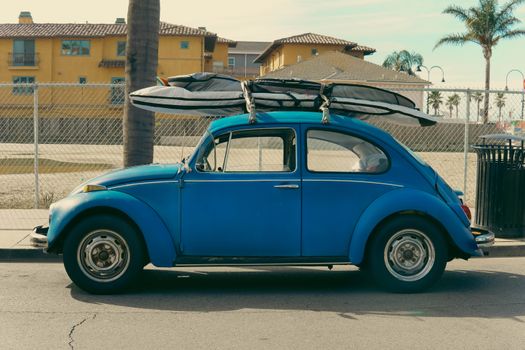
A classic blue Volkswagen Beetle with surfboards parked by a sunny beachside in California. Photo: James Collington / Pexels
Selecting the appropriate vehicle is a critical step in ensuring a successful and comfortable car rental Spain road trip. The ideal car largely depends on your itinerary, group size, and budget. For couples or solo travelers exploring cities and coastal routes, a compact or economy car is often sufficient. These smaller vehicles are more fuel-efficient, easier to maneuver through narrow historic streets, and simpler to park in bustling urban centers where space is a premium. However, if your journey involves mountainous regions like the Picos de Europa or the Sierra Nevada, or if you plan to venture onto unpaved roads, a slightly more powerful vehicle with better ground clearance might be preferable. Families or groups of friends will likely benefit from a mid-size sedan, an SUV, or even a minivan. These offer more passenger space and crucial luggage capacity, preventing discomfort and ensuring everyone's belongings fit without a squeeze. Consider the number of suitcases you'll be carrying; a car that looks spacious for passengers might have a surprisingly small boot. When booking, pay attention to whether the car is manual or automatic. While automatics are popular in many countries, manual transmission cars are far more common and generally cheaper to rent in Spain. If you're not proficient with a stick shift, be sure to specifically request an automatic, but be prepared for potentially higher costs and limited availability, especially during peak season. Fuel type is another consideration: diesel cars (gasóleo) are often more fuel-efficient for long distances, while petrol (gasolina) cars are generally cheaper to rent upfront. Assess your total mileage to determine which option makes more economic sense. Additionally, think about extras like GPS (though phone navigation is often sufficient), child seats, or roof racks if needed. Booking these in advance can save you hassle and ensure availability. Always verify the car's features against your needs before confirming your reservation. A well-matched vehicle can significantly enhance your road trip experience, providing comfort, reliability, and the freedom to explore Spain's diverse landscapes without compromise. Don't underestimate the importance of this decision; it sets the foundation for your entire journey across Spain.

Navigating the Essentials: Driving Laws, Tolls, and Insurance in Spain
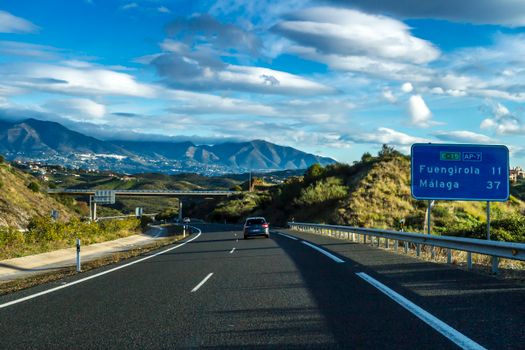
Beautiful view of AP-7 highway near Fuengirola and Málaga, with distant mountains under a blue sky. Photo: ricfer / Pexels
Understanding the nuances of driving laws, toll systems, and insurance is paramount for a smooth car rental Spain road trip. In Spain, driving is on the right-hand side of the road, and seatbelts are mandatory for all occupants. Speed limits are generally 120 km/h on motorways (autopistas), 90 km/h on national roads, and 50 km/h in urban areas, unless otherwise signposted. It's crucial to adhere to these limits, as speed cameras are common and fines can be substantial. A key piece of equipment you must carry in the vehicle is a reflective warning triangle and a reflective vest for each occupant, to be used in case of a breakdown. While not always enforced for tourists, having them readily accessible is good practice. Regarding documentation, alongside your valid national driving license, an International Driving Permit (IDP) is highly recommended for non-EU citizens. Although not always legally mandated if your license is easily decipherable in English, many rental agencies and local authorities prefer or require it. It acts as an official translation and can prevent complications. You must also carry your passport, car rental agreement, and vehicle registration documents (provided by the rental company). Spain has an extensive network of toll roads, known as 'autopistas' (AP-xx). These offer faster travel between major cities but come at a cost. You can pay tolls with cash, credit/debit cards, or via an electronic transponder system (Telepeaje or Via-T). If you plan to use toll roads frequently, inquire with your rental company about pre-installed transponders, which offer convenience and sometimes discounted rates. Insurance is a critical aspect. Basic third-party liability insurance (TPL) is usually included in the rental price by law. However, this only covers damages to other vehicles or property, not to your rental car. It's highly advisable to consider additional coverage. Options include Collision Damage Waiver (CDW) or Loss Damage Waiver (LDW), which reduce your financial liability for damage to the rental car, often with an excess (deductible). Super CDW or full insurance options can eliminate this excess entirely. Review your personal car insurance policy and credit card benefits, as some may offer rental car coverage. Always read the fine print of your rental agreement regarding insurance coverage to avoid unexpected charges. Understanding these elements ensures peace of mind and safeguards your budget during your car rental Spain road trip. For more detailed information on regulations, you can check out official government travel sites or consult your rental provider. Renting a car can be straightforward with proper preparation.

Top Tips for a Seamless Car Rental Spain Road Trip
Detailed image of car keys on a white surface, including a key fob and keychain. Photo: Brett Jordan / Pexels
To ensure your car rental Spain road trip is as smooth and enjoyable as possible, keep these expert tips in mind: * **Book Early, Especially Peak Season:** Demand for rental cars, particularly automatics, can skyrocket during summer, Easter, and national holidays. Booking several months in advance secures better rates and a wider choice of vehicles. * **Understand Fuel Policies:** Most common policies are 'Full to Full' (pick up full, return full) or 'Full to Empty' (pick up full, return empty, often with an upfront charge for fuel). 'Full to Full' is generally more cost-effective if you can refill before returning. * **Inspect Thoroughly at Pickup:** Before leaving the lot, walk around the car with a rental agent. Document any existing scratches, dents, or damage with photos or videos. Ensure these are noted on your rental agreement to avoid being charged for pre-existing issues. * **Familiarize Yourself with the Car:** Take a few minutes to locate indicators, wipers, lights, hazard warnings, and how to engage reverse gear. This prevents fumbling on busy roads. * **GPS or Offline Maps:** While rental companies offer GPS, using your smartphone with Google Maps, Waze, or a downloaded offline map (like Maps.me) is often more reliable and cost-effective. Ensure your phone has international data or download maps in advance. * **Parking Smart in Cities:** Major Spanish cities have strict parking rules. Look for underground parking garages (aparcamiento subterráneo) or designated 'blue zones' (zona azul) where you pay at a meter. Avoid 'green zones' (zona verde) which are often for residents only, and never park in 'yellow zones' (zona amarilla) which indicate no parking. * **Learn Basic Spanish Road Signs:** While many are intuitive, knowing terms like 'Stop' (Stop), 'Yield' (Ceda el Paso), 'No Entry' (Prohibido el Paso), and 'Diversion' (Desvío) can be very helpful. * **Be Aware of ZBEs (Low Emission Zones):** Many Spanish cities, including Madrid and Barcelona, have implemented Low Emission Zones. Your rental car may or may not have the required environmental sticker (distintivo ambiental). Check with your rental company if your itinerary includes these cities to avoid hefty fines. * **Emergency Numbers:** Memorize or save 112 (European emergency number) for police, ambulance, or fire services. Your rental agreement will also have a breakdown assistance number. * **Don't Leave Valuables in Sight:** As with any tourist destination, minimize the risk of theft by keeping valuables out of sight, especially when parked in public areas.

Comparison

FeatureEconomy Car (e.g., Fiat 500)Mid-Size Sedan (e.g., Seat Leon)Compact SUV (e.g., Nissan Qashqai)
Ideal ForSolo/Couple, City DrivingSmall Family, Mixed DrivingFamily/Group, Rural/Mountain
Fuel EfficiencyExcellentGoodModerate
Luggage SpaceLimited (1-2 small bags)Moderate (2-3 medium bags)Generous (3-4 large bags)
ManeuverabilityExcellent (city parking)GoodFair (can be tight in cities)
Cost (Daily Avg.)€20-€40€30-€60€45-€80+

What Readers Say

"Our car rental Spain road trip through Andalusia was flawless thanks to the excellent service. The car was clean, reliable, and perfect for navigating both cities and rural roads. Highly recommend for exploring southern Spain!"

Maria G. · London, UK

"Renting a car made our Picos de Europa adventure possible. We picked up an SUV in Bilbao and had no issues with the mountain passes. The freedom of a car rental Spain road trip is truly unmatched."

David S. · New York, NY

"We secured a fantastic deal for our car rental Spain road trip from Barcelona. The process was quick, and having our own vehicle meant we could visit charming coastal towns like Cadaqués and Sitges at our leisure, transforming our vacation."

Sophie L. · Paris, France

"The car itself was great for our car rental Spain road trip, and the price was competitive. My only small critique was the queue at pickup, but once we were on the road exploring the Camino de Santiago, it was all worth it."

Carlos R. · Berlin, Germany

"First time driving in Spain and the car rental made it so easy. From picking up at Madrid airport to dropping off in Valencia, everything went smoothly. An absolute must for anyone wanting to see the real Spain beyond the main cities."

Jessica M. · Sydney, Australia

Frequently Asked Questions

What are the age requirements for car rental in Spain?

Most car rental companies in Spain require drivers to be at least 21 years old. Some may impose a 'young driver surcharge' for those under 25, and certain vehicle categories might have a higher minimum age requirement, sometimes up to 25 or 26. Always check the specific terms and conditions of your chosen rental agency.

Do I need an International Driving Permit (IDP) for a car rental Spain road trip?

If you hold a driving license from a non-EU country, an International Driving Permit (IDP) is highly recommended and often legally required as a translation of your national license. While some rental agencies might not strictly demand it, Spanish traffic authorities can fine you if you don't have one. EU license holders do not need an IDP.

How do tolls work on Spanish roads and how do I pay?

Spain has both free (autovías, A-xx) and toll roads (autopistas, AP-xx). Tolls can be paid manually with cash or credit/debit card at the booths, or automatically using an electronic transponder system called 'Telepeaje' or 'Via-T'. You can often arrange for a transponder through your rental company for convenience, though it might incur an extra daily fee.

Is it expensive to rent a car in Spain for a road trip?

The cost of a car rental in Spain varies widely based on vehicle type, rental duration, time of year, and booking lead time. Economy cars can be found for €20-€40 per day, while larger vehicles are more. Factor in fuel costs, potential tolls, and insurance extras, which can significantly impact the total price. Booking in advance generally secures better rates.

What's the difference between manual and automatic cars in Spain?

Manual transmission cars are significantly more common and generally cheaper to rent in Spain compared to automatics. If you prefer or require an automatic vehicle, it's crucial to book well in advance, especially during peak season, as availability can be limited and prices higher. Ensure you specify your preference when making a reservation.

Who should consider a car rental Spain road trip?

A car rental Spain road trip is ideal for travelers who value flexibility, spontaneity, and wish to explore beyond major cities. It's perfect for those wanting to discover remote villages, national parks, or specific regional routes like the Andalusian white villages or the Basque coast, offering a more intimate and personalized travel experience.

What safety precautions should I take when driving in Spain?

Always adhere to speed limits, which are strictly enforced. Be aware of varying parking rules in cities (blue/green/yellow zones) to avoid fines or towing. Carry your reflective vest and warning triangles in the car, and know the emergency number (112). Avoid leaving valuables visible in your parked car to deter theft, especially in tourist areas.

Are there any future trends impacting car rental Spain road trips?

Future trends include the increasing availability of electric and hybrid rental cars, especially in major cities, aligning with Spain's environmental initiatives. Expect more widespread implementation of Low Emission Zones (ZBEs) in urban areas, requiring compliant vehicles. Digitalization of rental processes and AI-driven personalized route planning tools are also emerging.

Ready to unlock the full potential of Spain? A car rental Spain road trip offers the freedom to explore at your own pace, creating memories that last a lifetime. Start planning your unforgettable journey today and discover the magic of Spain on your terms.

Topics: car rental Spain road tripSpain road trip plannerrenting a car in Spainbest Spain road trip routesdriving in Spain tips
Leo List
Brampton weed
Adultwork EstrelaBet Vai de Bet R7 Bet Betão Galera Bet Rainbet Bet9ja Shop SportyBet BetKing Sisal Loto Foot Hollywoodbets YesPlay Odibets RushBet Jugabet BetWarrior BetCity MSport betPawa Fortebet