✓ An International Driving Permit (IDP) is legally required for US citizens driving in Spain.
✓ Credit cards are almost always required for rental deposits; debit cards are rarely accepted.
✓ Manual transmission cars are more common and often cheaper than automatics.
✓ Full insurance coverage, including Super CDW (Collision Damage Waiver) and Theft Protection, is highly recommended.
How It Works
1
Secure Your IDP & Driver's License
Before booking, ensure you have a valid US driver's license and obtain an International Driving Permit (IDP). The IDP translates your license into multiple languages, fulfilling a legal requirement in Spain.
2
Book Your Rental Car Online
Compare prices from reputable companies like Sixt, Europcar, Avis, and Hertz well in advance of your trip. Pay close attention to vehicle size, transmission type, and included insurance options.
3
Understand Insurance & Deposits
Decipher the various insurance options, opting for comprehensive coverage to avoid unexpected costs. Prepare for a significant security deposit, typically held on a major credit card.
4
Collect & Inspect Your Vehicle
Upon arrival, thoroughly inspect the car for any existing damage, documenting it with photos or videos. Familiarize yourself with the car's controls, especially if it's a manual transmission, before driving off.
Navigating the Essentials: Licenses, Permits, and Age Requirements for Driving in Spain
Photo: Alican Helik / Pexels
For US citizens planning an unforgettable road trip across Spain, understanding the fundamental requirements for legally operating a vehicle is paramount. The primary document you’ll need, beyond your valid US state-issued driver's license, is an International Driving Permit (IDP). This isn't merely a suggestion; it's a legal mandate in Spain for non-EU citizens. The IDP acts as a translation of your domestic license into ten different languages, ensuring that local authorities can easily understand your driving credentials. It's crucial to note that an IDP is only valid when presented alongside your original US driver's license; it does not replace it. You can obtain an IDP from the American Automobile Association (AAA) or the American International Automobile Association (AIT/FIA) in the United States. The application process is straightforward, usually requiring a completed application form, two passport-style photos, a copy of both sides of your valid US driver's license, and a fee. It's advisable to apply for your IDP several weeks before your departure to ensure it arrives in time. An IDP is typically valid for one year from its issue date.
Beyond documentation, age restrictions are another critical factor. While the legal driving age in Spain is 18, most car rental companies impose higher minimum age requirements, often 21 or even 23, for renting a vehicle. Furthermore, drivers under 25 years old are frequently subject to a 'young driver surcharge,' an additional daily fee that can significantly impact the total rental cost. Some premium or larger vehicle categories might have even higher age minimums, sometimes requiring drivers to be 25 or older. It's always best to check the specific age policies of your chosen rental company during the booking process to avoid any surprises. There might also be maximum age limits with certain companies, though these are less common. Being fully aware of these requirements will ensure a smooth start to your Spanish driving adventure, preventing any hiccups at the rental counter. Remember, adhering to these regulations is not just about compliance; it's about ensuring your safety and peace of mind while exploring the stunning landscapes and vibrant cities of Spain. For more detailed information on general car rental tips, check out our comprehensive guide on how to rent a car abroad.
Demystifying Car Rental Insurance in Spain: What US Citizens Need to Know
Photo: Mikhail Nilov / Pexels
One of the most complex yet vital aspects of renting a car in Spain for US citizens is understanding the insurance landscape. Unlike in the US, where personal car insurance often extends to rentals, European rental insurance policies and requirements can be quite different. Basic rental agreements in Spain typically include Third-Party Liability (TPL) insurance, which covers damages to other vehicles or property and injuries to third parties. However, this basic coverage often leaves you financially responsible for damages to your rental car. This is where Collision Damage Waiver (CDW) and Theft Protection (TP) come into play. CDW reduces your financial liability for damage to the rental vehicle itself, while TP covers the vehicle in case of theft. Both usually come with a significant excess (deductible), meaning you're still responsible for the first portion of repair or replacement costs.
To mitigate this excess, many rental companies offer Super CDW (SCDW) or Full Coverage options, which significantly reduce or even eliminate your deductible. While these add to the daily rental cost, they offer invaluable peace of mind, especially when navigating unfamiliar roads. Before purchasing additional insurance from the rental company, check with your credit card provider. Many premium credit cards offer secondary car rental insurance benefits that cover CDW/LDW (Loss Damage Waiver) for rentals abroad, provided you decline the rental company's CDW and pay for the rental entirely with that card. Be aware that credit card coverage usually doesn't include Third-Party Liability, so you'll still need the basic TPL provided by the rental company. It's crucial to call your credit card company directly to understand the specifics of their coverage, including any exclusions (e.g., certain vehicle types, specific countries, or duration limits) and the claims process.
Additionally, consider travel insurance policies, some of which offer primary car rental excess insurance. This can be a cost-effective alternative to the rental company's full coverage. Regardless of your choice, ensure you have comprehensive coverage that protects you from all potential financial liabilities. Without adequate insurance, a minor fender bender or theft could turn your dream Spanish vacation into a financial nightmare. Take the time to understand your options, compare costs, and choose the coverage that best suits your risk tolerance and budget. Remember, clarity on insurance before you pick up the keys is non-negotiable for a stress-free experience.
Booking Smart: Tips for Securing the Best Car Rental Deal in Spain
Photo: Tima Miroshnichenko / Pexels
Securing the best car rental deal in Spain requires a strategic approach, especially for US citizens looking for value and convenience. The first and most crucial tip is to book your car well in advance, ideally several months before your trip, particularly if you're traveling during peak season (summer, national holidays, or major festivals like Semana Santa or La Tomatina). Early booking often translates to lower prices and a wider selection of vehicles. Major international rental companies such as Sixt, Europcar, Avis, Hertz, and Budget operate extensively in Spain, offering reliable service and a good range of vehicles. However, don't overlook local Spanish companies or consolidators like Goldcar, Centauro, or Record Go, especially for competitive pricing, though always read reviews carefully for these smaller providers.
When comparing prices, pay close attention to what's included in the base rate. Many budget-friendly options might seem attractive initially but then add significant costs for essentials like unlimited mileage, additional drivers, GPS, child seats, and, most importantly, fuel policies. Opt for a 'full-to-full' fuel policy where you pick up the car with a full tank and return it full, avoiding inflated refueling charges from the rental company. Be wary of 'pre-purchase with no refund' policies, as you often pay for fuel you don't use at a premium price. Additionally, consider the vehicle size. While a larger car might seem comfortable, smaller vehicles are often easier to navigate through Spain's narrow historic city streets and find parking. Manual transmission cars are far more prevalent and generally cheaper than automatics, so if you can drive stick, you'll have more options and save money. If you absolutely require an automatic, book it early, as they are in higher demand and fewer in supply.
Finally, always compare prices across multiple platforms. Use reputable comparison websites but also check the rental companies' direct websites, as they sometimes offer exclusive deals. Read the fine print of the rental agreement thoroughly before confirming your booking. Look for hidden fees, cancellation policies, and details about the security deposit. A substantial security deposit, often several hundred to over a thousand euros, will be held on your credit card, so ensure you have sufficient credit available. Understanding these nuances can save you considerable money and prevent unpleasant surprises at the rental counter, making your car rental experience in Spain as smooth and enjoyable as possible. For more insights on saving money while traveling, explore our guide on budget travel car rental.
Driving in Spain: Road Rules, Tolls, and Practical Tips for US Drivers
Photo: Jan van der Wolf / Pexels
Driving in Spain as a US citizen offers unparalleled freedom to explore, but it's essential to be familiar with local road rules and customs. Spain drives on the right side of the road, similar to the US, which simplifies adaptation. However, roundabouts are incredibly common and can be intimidating initially. Remember to yield to traffic already in the roundabout. Speed limits are clearly posted: typically 50 km/h (31 mph) in urban areas, 90 km/h (56 mph) on rural roads, and 120 km/h (75 mph) on motorways (autopistas). Speed cameras are prevalent, and fines can be steep, so always adhere to the posted limits. Seatbelts are mandatory for all occupants, and using a mobile phone while driving is strictly prohibited unless using a hands-free system.
Spanish road signs generally follow international standards, using pictograms that are easy to understand. However, it's a good idea to familiarize yourself with common European road signs before your trip. Pay particular attention to 'Ceda el Paso' (Yield) and 'Stop' signs. Parking can be challenging, especially in city centers. Look for blue zones (zona azul) which are paid parking, typically with time limits. White zones are free but rare, and yellow lines usually indicate no parking. Underground parking garages (parking subterráneo) are often the most convenient option in cities, albeit at a cost. Many historic city centers have 'Zona de Bajas Emisiones' (Low Emission Zones) or 'Zonas de Acceso Restringido' (Restricted Access Zones) which require special permits or are only accessible to residents. Driving into these zones without authorization can result in hefty fines, so plan your routes carefully, especially if your accommodation is in a city center.
Spain has an excellent network of motorways, many of which are toll roads (autopistas de peaje). These tolls can be paid with cash or credit card at the booths, or via an electronic transponder (Via-T) if your rental car is equipped with one. While toll roads offer faster travel, there are often free alternative routes (autovías) that are slower but more scenic. Consider downloading offline maps or using a GPS with up-to-date traffic information. Always carry your driver's license, IDP, passport, and rental agreement documents with you in the car. In the event of a breakdown or accident, you are required to wear a reflective vest when outside your vehicle on the road and place a warning triangle behind the car. Spanish drivers can be assertive, but generally courteous. Stay alert, anticipate maneuvers, and enjoy the journey through Spain's diverse landscapes. These practical tips will help ensure a safe and enjoyable driving experience for US citizens in Spain.
Comparison
Feature
Recommended for US Citizens
Budget Option
Premium Option
IDP Requirement
Mandatory
Mandatory
Mandatory
Insurance Coverage
Full Coverage (SCDW/Excess Waiver)
Credit Card CDW (verify)
Rental Co. Full Coverage
Transmission
Automatic (if preferred)
Manual (cheaper)
Automatic (readily available)
Fuel Policy
Full-to-Full
Full-to-Full
Full-to-Full
Booking Time
2-3 months in advance
1 month in advance
Anytime
Vehicle Size
Compact/Mid-size SUV
Economy/Compact
Luxury/Large SUV
Deposit Required
Yes, significant
Yes, significant
Yes, significant
Young Driver Surcharge
Likely if under 25
Likely if under 25
Likely if under 25
GPS Included
Often extra
Always extra
Sometimes included
What Readers Say
★★★★★
"Renting a car in Spain as a US citizen was seamless thanks to getting my IDP beforehand. We drove from Barcelona to Seville, and having the car made exploring small towns so much easier. Highly recommend comprehensive insurance!"
Sarah J. · Austin, TX
★★★★★
"I was nervous about driving a manual, but after a few hours, it was fine. The car rental in Spain for US citizens guide helped me understand the insurance, which saved me a lot of stress at the counter. Definitely get the full coverage."
Michael D. · Chicago, IL
★★★★★
"We booked an automatic car months in advance for our trip to Andalusia, and it was perfect. The IDP was checked, and having everything prepared meant we were on the road exploring within minutes. Our road trip through the white villages was unforgettable."
Emily R. · Miami, FL
★★★★★
"The only hiccup was finding parking in Granada, but that's typical for European cities. The car itself was great, and the process for car rental Spain for US citizens was clear. Just be prepared for the young driver surcharge if you're under 25."
David L. · Seattle, WA
★★★★★
"My husband and I rented a car for a two-week tour of northern Spain. Getting the IDP and understanding the toll roads was key. We got a fantastic deal by booking early and choosing a 'full-to-full' fuel policy. It truly enhanced our travel flexibility."
Jessica M. · New York, NY
Frequently Asked Questions
Is an International Driving Permit (IDP) required for US citizens to rent a car in Spain?
Yes, an International Driving Permit (IDP) is legally required for US citizens to drive or rent a car in Spain. It serves as an official translation of your US driver's license and must always be carried alongside your valid physical US license. Without both, you risk fines and potential issues with rental companies or authorities.
What type of insurance do I need for car rental in Spain as a US citizen?
While basic Third-Party Liability insurance is usually included, it's highly recommended that US citizens opt for comprehensive coverage, such as a Collision Damage Waiver (CDW) with zero or low excess (deductible), and Theft Protection (TP). Check if your credit card offers secondary rental car insurance, but be aware it typically doesn't cover third-party liability.
How do I deal with tolls and parking when driving a rental car in Spain?
Many major Spanish motorways are toll roads (autopistas). You can pay tolls with cash or credit card at booths, or if your rental car has a Via-T transponder, it will be automatically charged. For parking, look for blue zones (paid), white zones (free, rare), or yellow lines (no parking). Underground parking garages are common in cities. Be aware of Restricted Access Zones in city centers.
Are automatic transmission cars readily available for rental in Spain?
Automatic transmission cars are available in Spain, but they are less common and generally more expensive than manual transmission vehicles. If you require an automatic, it's crucial to book well in advance, especially during peak travel seasons, to ensure availability and a better rate.
Can I use my US credit card for the security deposit on a Spanish rental car?
Yes, major US credit cards (Visa, MasterCard, American Express) are almost universally accepted for the security deposit on rental cars in Spain. A significant deposit will be pre-authorized on your card, so ensure you have sufficient available credit. Debit cards are rarely accepted for deposits.
Who should consider car rental Spain for US citizens?
Car rental in Spain is ideal for US citizens who want the flexibility to explore beyond major cities, visit rural areas, or embark on a multi-city road trip at their own pace. It's perfect for those seeking off-the-beaten-path experiences and direct access to Spain's diverse landscapes and charming towns.
What are the biggest risks or mistakes to avoid when renting a car in Spain?
The biggest risks include not having an IDP, insufficient insurance coverage (leading to high out-of-pocket costs), not thoroughly inspecting the vehicle for damage before driving off, and not understanding local traffic laws or restricted driving zones. Always read your rental agreement carefully and document everything.
Will electric vehicle rentals become more common for US citizens in Spain?
Electric vehicle (EV) rentals are gradually becoming more common in Spain, especially in larger cities and at major airports. As charging infrastructure expands and demand increases, EV options will likely become more prevalent for US citizens, offering an eco-friendly way to explore Spain in the coming years.
Embark on the Spanish adventure of a lifetime with the freedom of your own wheels. With this comprehensive guide on car rental in Spain for US citizens, you're now equipped with the knowledge to navigate the roads, understand the rules, and secure the best deal. Start planning your unforgettable road trip today and unlock the true beauty of Spain.

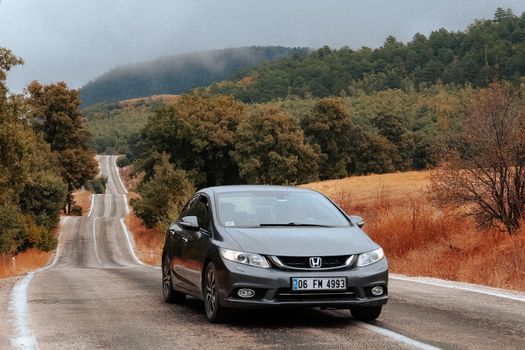 Photo: Alican Helik / Pexels
 Photo: Mikhail Nilov / Pexels
 Photo: Tima Miroshnichenko / Pexels
 Photo: Jan van der Wolf / Pexels